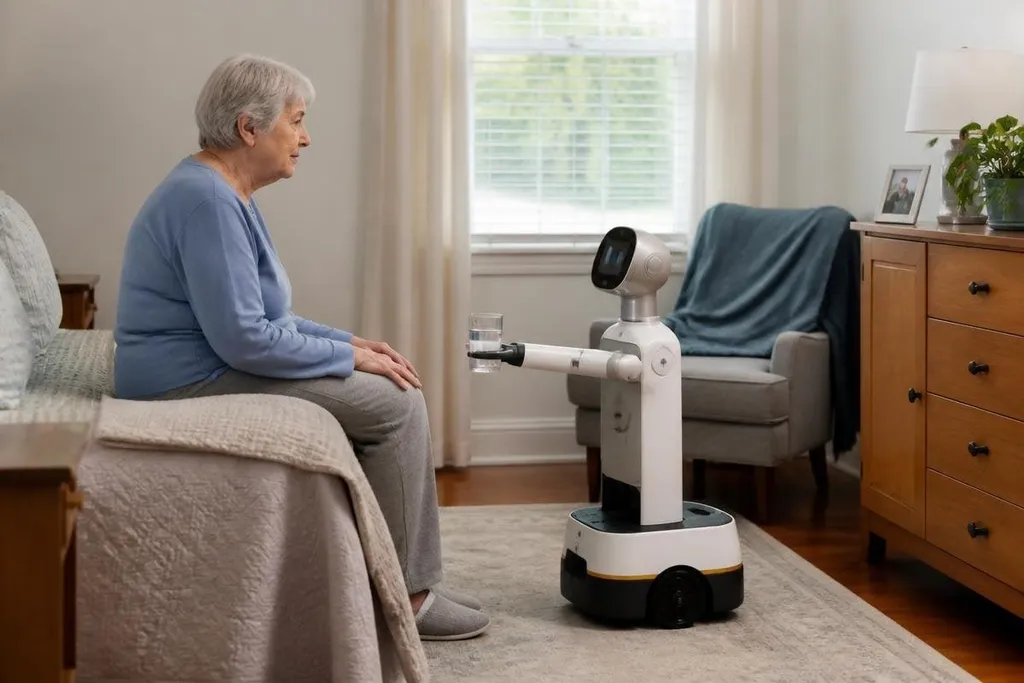
A home healthcare robot may remind someone to take medicine, call for help, or carry a small object across a room. The hard part is deciding what the robot may do alone, what needs approval, and what happens when its sensors get confused.
- Useful work: reminders, remote check-ins, and simple object delivery
- Main risk: a robot may miss a fall, misread a person, or block a safe route
- Buying test: ask who responds when the robot gets a task wrong
The work a home robot can handle
Home care has many small tasks that follow a clear pattern. It could bring a water bottle, tell a person about an appointment, read a message aloud, or connect them with a family member or nurse.
These tasks matter because they can reduce the number of times a person needs to move across the home. They also give a remote caregiver a way to check in without treating every visit as an emergency.
With a camera and microphone, the system could help with a video call, but that creates a clear limit. The system needs a visible way to show when it is listening or recording, and the person at home needs a way to stop it.
Where autonomy should stop
The system may spot that someone has fallen, but spotting a person on the floor is different from knowing why they fell. A loose rug, low blood pressure, a blocked path, or a medical emergency each calls for a different response.
That gap makes medical judgment a poor fit for unsupervised home robots. The robot can report what its sensors detect and contact a named person, while a trained human decides what to do next.
Physical movement brings another risk. A mobile robot needs to avoid feet, walkers, pets, cables, and furniture in rooms that change from one day to the next. A safe system should slow down near people and stop when it cannot read the path.
Trust depends on control
The person using the robot should be able to pause movement, mute the microphone, close the camera, and call a human without searching through menus. A large physical stop button may matter more than a long list of software features.
Privacy also needs plain rules. Families should know where recordings go, how long they stay there, and who can view them. A care company should explain those choices before installation, not after a problem.
Privacy rules only work if the robot’s safety record is equally clear. A family should be able to trace each safety claim to the machine, test setting, and response plan through home healthcare robotics reporting. That detail matters when the person needing care can’t fix a failed sensor or call a technician alone.
I’d wait for clear safety records and a named human response team before putting one in a relative’s home.
A polished demo can show a robot completing one task; it cannot show how the system behaves after a fall, a network failure, or a frightened user changes the plan.
What still needs proof
The open questions are practical. Can the robot work in a small home with poor lighting? Can it tell a dropped blanket from a person on the floor? Can a caregiver review an alert quickly enough to help?
Product makers also need to state the limits of their systems. One that handles reminders may be useful for medication routines, but that does not make it safe to choose a dose or judge a symptom.
The evidence should include ordinary homes, long use periods, missed alerts, false alarms, and failures during internet outages. Short demonstrations leave out the conditions that decide safety.
A buyer’s checklist
Before choosing a home healthcare robot, check these points:
- Task list: Write down the exact jobs you expect it to do, then match each job to a tested function.
- Human backup: Find the person or service that receives alerts and learn how quickly they respond.
- Manual controls: Test the stop button, camera shutter, microphone mute, and emergency call feature.
- Privacy terms: Ask where video and audio data are stored, who can access them, and when they are deleted.
- Failure plan: Ask what the robot does after a power cut, network loss, blocked route, or missed command.
Home healthcare robots have a place in routine support, remote contact, and simple transport inside the home. Their wider use should wait for clear limits, public test results, and a human who answers when the robot gets it wrong.